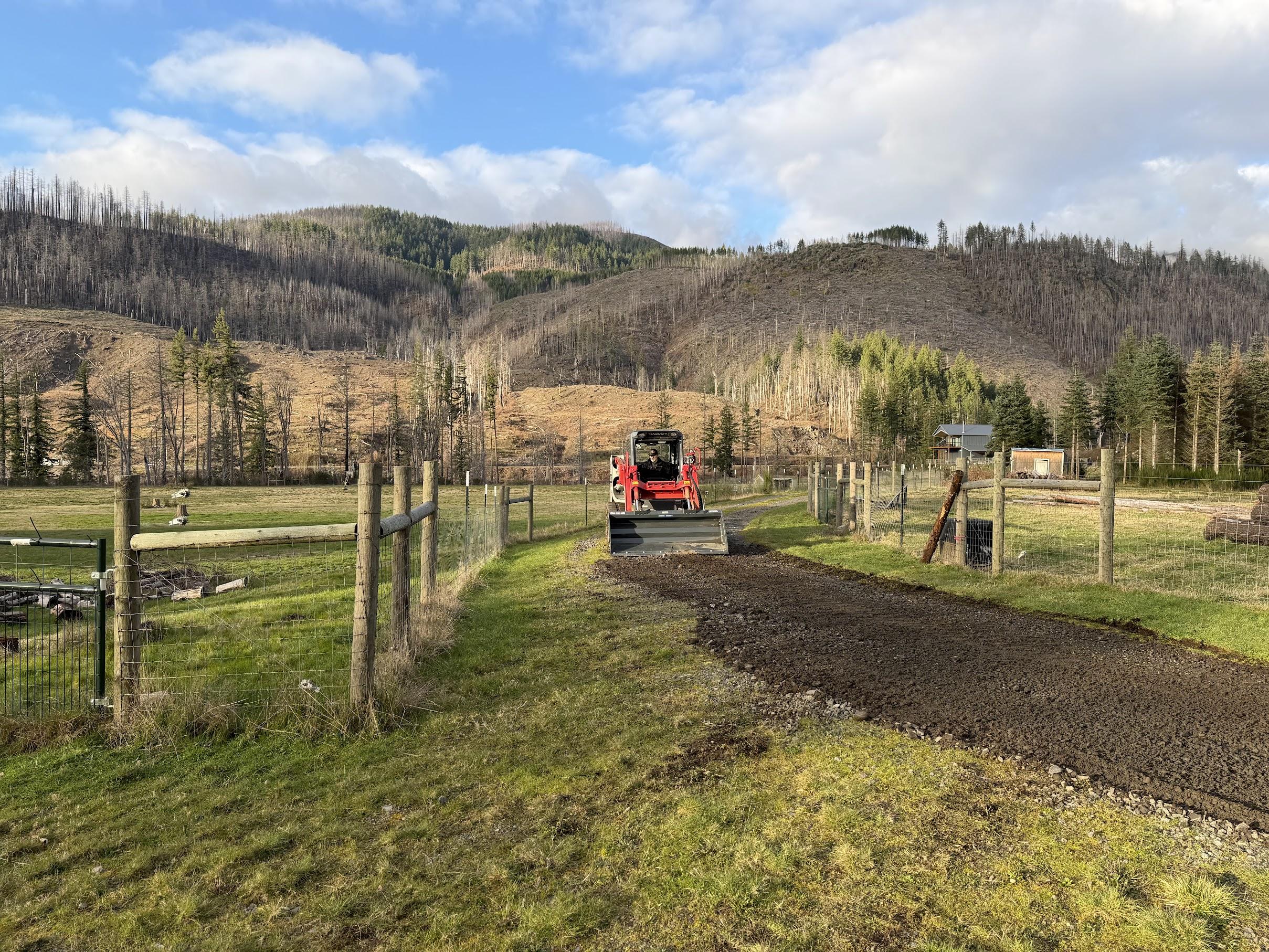
Gravel Driveway Ruts — Repair or Replace?
Gravel Driveway Ruts — Repair or Replace?
If you've got a gravel driveway that's developed ruts, washboarding, or drainage problems, you've probably faced a familiar question: is it worth fixing, or do I just need to start over?
It's a reasonable thing to wonder — especially if you've watched the same driveway deteriorate year after year despite throwing rock at it. But in most cases, the answer isn't what property owners expect. Full replacement is rarely the right answer for a gravel driveway. And understanding why can save you a significant amount of money.
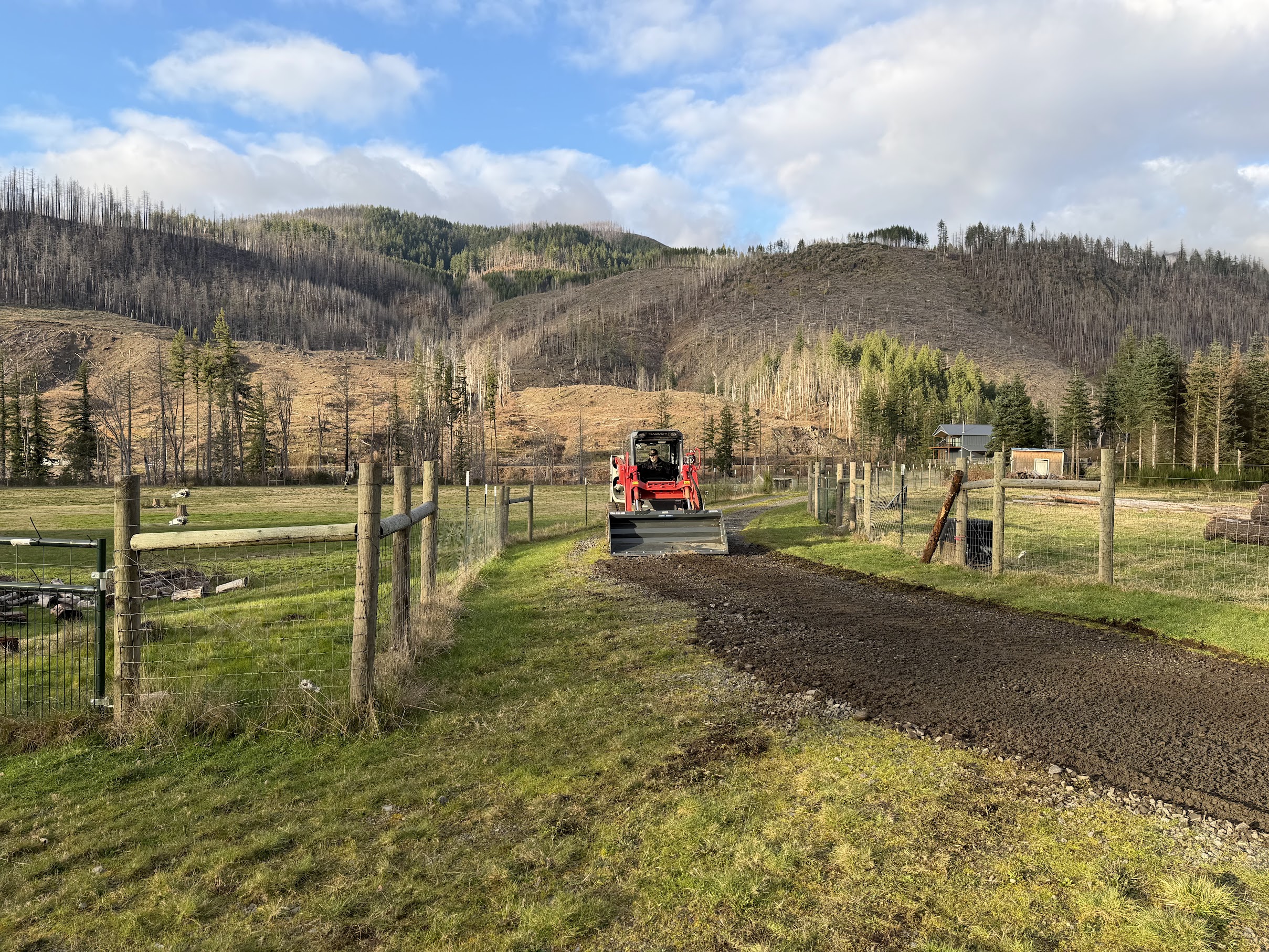
Why Gravel Driveways Fail (And Why It's Not What You Think)
Most people assume a deteriorating gravel driveway means the material has worn out. In reality, that's rarely what's happening. Gravel and crushed rock don't wear out — they get displaced.
Here's what actually causes driveway problems in western Oregon:
Traffic pushes rock to the edges over time, leaving the travel lane thin and soft
Improper drainage grade causes water to channel down the center, cutting ruts
Freeze-thaw cycles in winter loosen and shift compaction
Heavy vehicles on soft spring ground create deep ruts that harden in place
The original crown flattens over time
In most cases, the material that made up your original driveway is still there — it's just in the wrong place, at the wrong grade, with the wrong compaction. That's a reconditioning problem, not a replacement problem.
Signs Your Driveway Needs Reconditioning (Not Replacement)
Reconditioning is the right answer when:
You have ruts or washboarding but the base material is still present and solid
Rock has migrated to the edges and the center is thin but not gone
Water is pooling or channeling because grade and crown have flattened
The driveway is generally functional but increasingly rough
You've been adding rock every year or two and it doesn't seem to be helping
That last one is a classic sign that something structural is wrong. Adding new rock to a driveway with improper grade just means you're adding material that will migrate the same way the old material did. The fix isn't more rock — it's restoring the grade so water sheds correctly.
Signs Your Driveway Might Actually Need Replacement
Replacement applies when:
The base material has been contaminated with fine soil to the point where it no longer drains
The subgrade is chronically soft and unstable regardless of surface work
The driveway was never properly built — no base preparation, inadequate depth, wrong material
You're significantly changing the layout or alignment of the driveway
Even in some of these situations, partial reconditioning combined with targeted new material can avoid a full replacement. An honest contractor will tell you which situation you're actually in.
The Cost Difference — Why It Matters
Full driveway replacement involves excavating and removing all existing material, preparing the subgrade, and installing new base rock and surface material from scratch. For a typical rural driveway, that's a substantial project.
Reconditioning uses the material that's already there. The existing rock is reclaimed, remixed, and restored to proper grade. New material is only added where depth is genuinely insufficient. For most rural Oregon property owners dealing with rutting, washboarding, and drainage issues, reconditioning delivers the same functional result at a fraction of the cost.
What to Expect From a Driveway Reconditioning Project
A professional reconditioning starts with an assessment of your driveway's current condition. From there, the process typically involves:
Pulling displaced rock back from the edges onto the travel surface
Turning and remixing the material to break up compaction
Regrading to re-establish proper crown and drainage slope
Compacting the restored surface
Adding new material in areas where depth is insufficient
Most residential driveways can be reconditioned in a single day.
Oregon-Specific Considerations
Western Oregon's climate creates specific driveway challenges. A few things worth knowing if you're in the Salem area:
Spring is the worst time for driveway condition — schedule reconditioning for late summer or fall when ground conditions are firmer
If you have significant clay in your subgrade, drainage grade is especially important
If your driveway has consistent pooling in the same spot year after year, that's a grade problem that rock alone won't solve
Not Sure What Your Driveway Needs? Start With an Assessment.
Q&R Construction Services provides professional driveway reconditioning for residential and rural properties throughout Salem, Oregon and the Willamette Valley. We'll assess your driveway honestly, tell you whether reconditioning makes sense, and give you a clear estimate before any work begins.
→ Request a free driveway reconditioning estimate: /driveway-reconditioning-salem-or Or call us at (503) 751-2171.
